The Adriatic Sea is entering a new chapter — a quiet transformation reshaping maritime logistics, coastal economies, naval strategy, energy corridors, environmental policy, tourism flows, and digital infrastructure across Southern Europe. What once appeared to be a stable, predictable maritime basin is now a dynamic space influenced by the global return of geo-economics, climate uncertainty, supply-chain reorganization, and Europe’s intensified focus on resilience. In this shifting landscape, Montenegro occupies a position that is far more strategic than its size suggests. By 2040, the country could become a central node in the Adriatic’s reconfigured maritime economy: a connector of energy, logistics, digital cables, green shipping, tourism, and naval cooperation across the Mediterranean and the Western Balkans.
Montenegro’s maritime future begins with geography. Its coastline may be short, but its maritime profile is deep. The Bay of Kotor is one of Europe’s most secure natural harbours. The port of Bar sits closest to the Balkan interior, forming the Adriatic’s most direct maritime corridor to Belgrade, Sarajevo, and the wider region. The Montenegrin coastline lies along routes linking Italian ports to the Eastern Adriatic and the Aegean. Its proximity to major European markets, combined with natural depth and coastal configuration, gives Montenegro a maritime potential that far exceeds its demographic size.

The Adriatic Sea itself is undergoing strategic redefinition. Europe’s energy transition is shifting emphasis toward green corridors, offshore renewables, LNG infrastructure, and subsea electricity connectivity. Maritime logistics are adapting to a new reality shaped by digitalization, automation, and cost pressures across global shipping. Naval presence is increasing as great-power competition intensifies in the Mediterranean basin. Tourism patterns are evolving as travelers seek authenticity, sustainability, and security. Environmental pressures — rising seas, warming waters, biodiversity threats — are forcing governments to rethink coastal development models. Montenegro finds itself at the crossroads of all these trends.
To understand Montenegro’s maritime future, one must begin with the Port of Bar. Historically underutilized, often mismanaged, and lacking deep modernization, Bar has nonetheless retained one extraordinary advantage: location. It is the nearest sea gateway for Serbia, a landlocked country of seven million people. It offers the shortest maritime path to Montenegro’s own capital and to Bosnia and Herzegovina. Its hinterland is rich with potential for multimodal logistics if rail, road, and digital infrastructure are properly upgraded. In an era when Europe seeks to diversify supply routes, strengthen regional connectivity, and reduce over-reliance on congested or geopolitically sensitive ports, Bar gains strategic attractiveness.

By 2040, Bar could become the Adriatic’s next major logistics hub — but only if Montenegro adopts a coherent vision and governance framework. This requires transparent port management, modern digital systems, container-handling capability, intermodal terminals, and integration with European transport networks. A modernized Bar would serve not only as a commercial port but as a strategic asset for the Western Balkans. It could handle green shipping, support regional energy infrastructure, and participate in maritime security operations. The digitalization of customs, logistics tracking, and freight corridors would further strengthen the port’s position within Europe’s reconfigured supply architecture.
Montenegro’s maritime future also depends on the reorientation of the global tourism economy. The Adriatic coastline has emerged as one of Europe’s most competitive tourism regions. Croatia, Italy, and Slovenia already command strong global visibility. Montenegro now aims to position itself not simply as an alternative but as a boutique, premium complement to these destinations. In an era of overtourism and environmental exhaustion across parts of the Mediterranean, Montenegro can build a differentiated coastal model built on exclusivity, sustainability, and cultural authenticity.
By 2040, marinas, yachting, and cruising will evolve significantly. Global yacht traffic is expected to grow, but with an emphasis on sustainability, digital services, and low-impact infrastructure. Montenegro’s marina network — particularly in Tivat and Herceg Novi — positions the country as a rising Adriatic yachting destination. If Montenegro invests in green marina infrastructure, electric-charging facilities, environmentally safe harbour practices, and modern port services, it can attract high-net-worth tourism while protecting coastal ecosystems.
At the same time, cruise tourism faces pressure to reduce emissions, minimize local disruption, and adapt to environmental constraints. Kotor has already experienced the impacts of large cruise volumes. By 2040, the country must implement a modern cruise-management policy that preserves the heritage of Kotor while enabling a controlled, high-value cruise segment. The future of cruise tourism is premium, low-impact, culturally oriented, and digitally coordinated — precisely the niche Montenegro can fill.
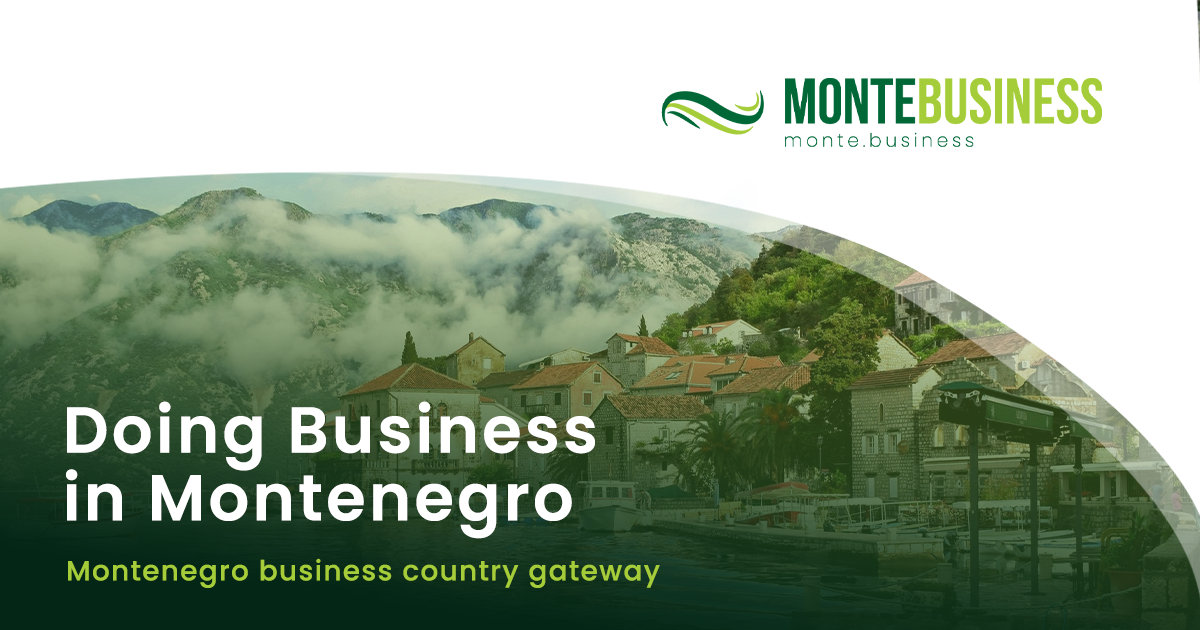
The Bay of Kotor itself carries strategic weight beyond tourism. Its unique geography has made it a prized maritime asset for centuries. Today, its strategic value lies in environmental stewardship, tourism management, and maritime monitoring. A well-governed Kotor Bay can serve as a regional model for integrated coastal protection — balancing tourism, heritage preservation, environmental science, and maritime safety. As climate pressure intensifies, Montenegro may need to develop protective infrastructure and coastal-zone management tools to safeguard this irreplaceable maritime jewel.
Digital infrastructure is increasingly at the heart of maritime strategy. By 2040, subsea cables will become even more essential to Europe’s digital economy. The Adriatic is a natural corridor for data linkages connecting Southern Europe to the Mediterranean and onward to global networks. Montenegro can position itself as a data-transit location if it develops coastal landing stations, secure digital facilities, and reliable energy infrastructure. Digital maritime corridors — linking Italy, Montenegro, Albania, and Greece — could become part of the region’s broader digital-integration framework.
Energy is another strategic pillar of the Adriatic’s reconfiguration. Europe’s shift toward renewable energy alters the maritime landscape dramatically. Offshore wind, floating solar, green hydrogen production, underwater cables, and smart-grid integration all influence coastal planning. While Montenegro’s coastline may not be ideal for large offshore wind installations, the country can benefit from the Adriatic’s broader shift towards maritime-energy solutions. Its submarine cable to Italy positions it as a potential energy exporter, and its coastal and inland renewable resources can feed into wider European grids. Regional energy cooperation in the Adriatic could create a new ecosystem of shared infrastructure, green-power corridors, and joint maritime-energy strategies.
Security plays a central role in Montenegro’s maritime future. The Adriatic is becoming more contested, not in a hostile sense but through intensified presence by major powers. NATO’s maritime posture is strengthening, reflecting concerns about hybrid threats, energy vulnerabilities, and disruptive activities in the Mediterranean. Montenegro, as a NATO member, contributes to a secure Adriatic corridor extending from Italy down to Albania and Greece. Maritime domain awareness, coast-guard cooperation, naval exercises, and port security all form part of Montenegro’s evolving security responsibilities. The country does not need a large navy; it needs modern equipment, strong intelligence coordination, and integration with NATO’s maritime frameworks.
Environmental protection will shape the Adriatic more than any other factor by 2040. The sea is warming. Biodiversity is under stress. Pollution from shipping, tourism, and coastal development threatens fragile ecosystems. Montenegro’s brand — its identity and economic base — depends on blue waters, clean coasts, and healthy marine life. A future maritime strategy requires strict environmental standards, protected marine zones, green maritime practices, and constant scientific monitoring. Sustainable fishing, coastal erosion management, and waste-water infrastructure become essential components of national security, not merely environmental policy.
Montenegro must also confront the social dimension of its maritime future. Coastal communities will face new pressures: property prices rising due to foreign demand, tourism-driven seasonality shaping labour markets, and environmental restrictions affecting traditional livelihoods. Montenegro’s maritime strategy must therefore balance economic opportunity with social cohesion. Coastal towns must remain livable for residents, not merely profitable for investors. Infrastructure must support year-round life, not only tourism peaks. Local identity must remain strong in the face of global economic integration.
The inland–coastal connection must be strengthened as well. Montenegro’s future cannot be split between a booming coast and a depopulating north. Maritime development must be integrated with inland supply chains, tourism routes, renewable-energy systems, and digital networks. The Bar–Boljare highway will help connect inland Montenegro to Adriatic economic activity, creating a more cohesive national economy. Inland towns can contribute agricultural products, workforce, hospitality services, and cultural experiences that enrich maritime tourism and trade.
By 2040, Montenegro’s role in the Adriatic will depend on its ability to modernize governance. Maritime policy requires strong institutions, professional port management, environmental enforcement, sophisticated urban planning, and interministerial coordination. Without governance capacity, even the best maritime assets cannot reach their potential. EU membership strengthens this foundation by embedding Montenegro within European maritime, environmental, transport, and digital frameworks.
Montenegro’s maritime destiny also intersects with its diplomatic orientation. As a stable, Western-aligned, EU-committed Adriatic state, Montenegro can become a reliable partner in regional maritime cooperation. Joint patrols, shared rescue operations, disaster response, climate research, and infrastructure collaboration all benefit from Montenegro’s stability. The country’s voice gains disproportionate weight precisely because it is small, focused, and credible.
The maritime economy of the Adriatic in 2040 will be more integrated, more digital, more sustainable, and more strategically contested than today. Montenegro has the opportunity to shape this future rather than react to it. The foundations are already visible: a modernizing port, premium marinas, a coastline rich in biodiversity, a NATO security overlay, EU integration on the horizon, and an economy shifting toward sustainability and digitalization.
Montenegro’s challenge is strategic discipline. The country must think not in short electoral cycles but in multi-decade maritime horizons. It must protect its coastline as a national treasure, develop Bar as a strategic hub, strengthen digital and energy infrastructure, modernize its maritime administration, and engage in regional diplomacy with purpose. Only then can Montenegro create a maritime identity that is resilient, prosperous, and aligned with 21st-century realities.
The Adriatic of 2040 will be shaped by climate, technology, and geopolitics. Montenegro can be a passive coastline or an active maritime state. If it chooses the latter, it can emerge not merely as another port on the map but as a central Adriatic actor — a country whose maritime economy defines its national trajectory and whose strategic position strengthens Europe’s southern flank.
Elevated by www.mercosur.me